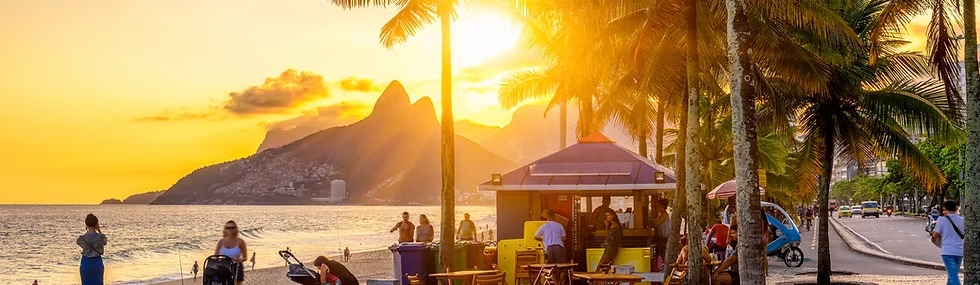
Welcome to Rio de Janeiro, a city where dramatic natural landscapes meet a rich cultural life shaped by history, music and everyday traditions. Framed by mountains, beaches and Guanabara Bay, Rio offers a vibrant atmosphere with a strong local identity and a unique rhythm of life.
To experience the authentic side of the city, we recommend:
Feira da Glória
A relaxed Sunday market where locals gather to enjoy fresh produce, street food, handicrafts and live music.
Feira Hippie de Ipanema
A lively Sunday street fair showcasing Brazilian art, crafts, jewellery and souvenirs in the heart of Ipanema.
Feira do Rio Antigo (Rua do Lavradio)
A Saturday antiques and vintage market set on one of Rio’s most atmospheric historic streets.
Rua do Senado
A vibrant street in the city’s historic centre, known for its bars, restaurants and lively local atmosphere. Its appeal was recognised when it was voted Time Out’s “Coolest Street in the World” for 2026.
Feijoada in Lapa
Rio’s classic black-bean stew, enjoyed in traditional botecos around the iconic Lapa Arches.
Samba in Lapa
Authentic samba in one of its spiritual homes, with informal street gatherings and live music.
Rio at Sunset
Unforgettable sunsets from viewpoints such as Mureta da Urca or Arpoador.
Walking Tour of Rio’s Historic Centre
A walking route through the city’s past, from colonial landmarks to modern icons such as the Museum of Tomorrow.
Petiscos
Sampling petiscos is an essential part of Rio’s food culture. Classics such as bolinho de bacalhau, pastel and caldo de cana are enjoyed at bars and markets across the city. Well-known spots for bolinho de bacalhau include Pavão Azul and Adega Pérola, both in Copacabana.