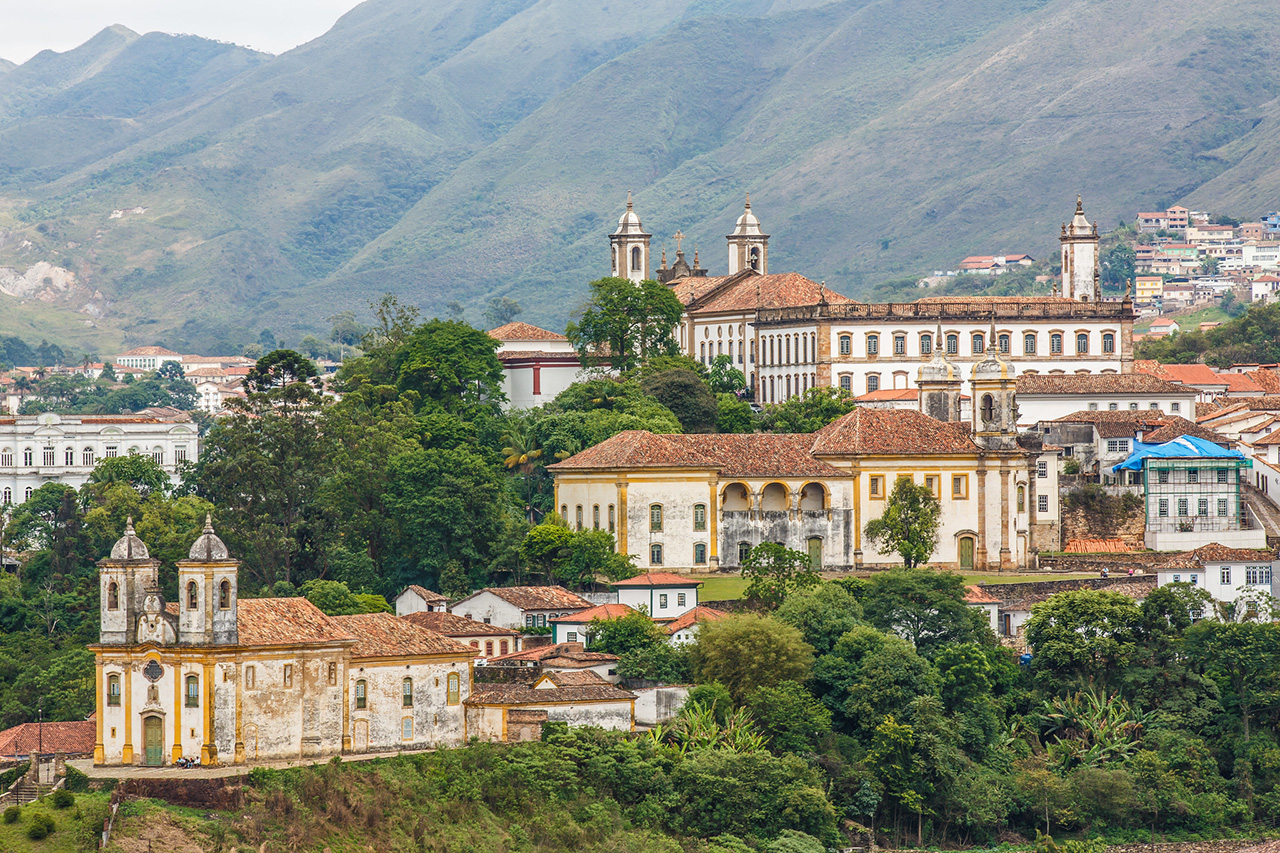
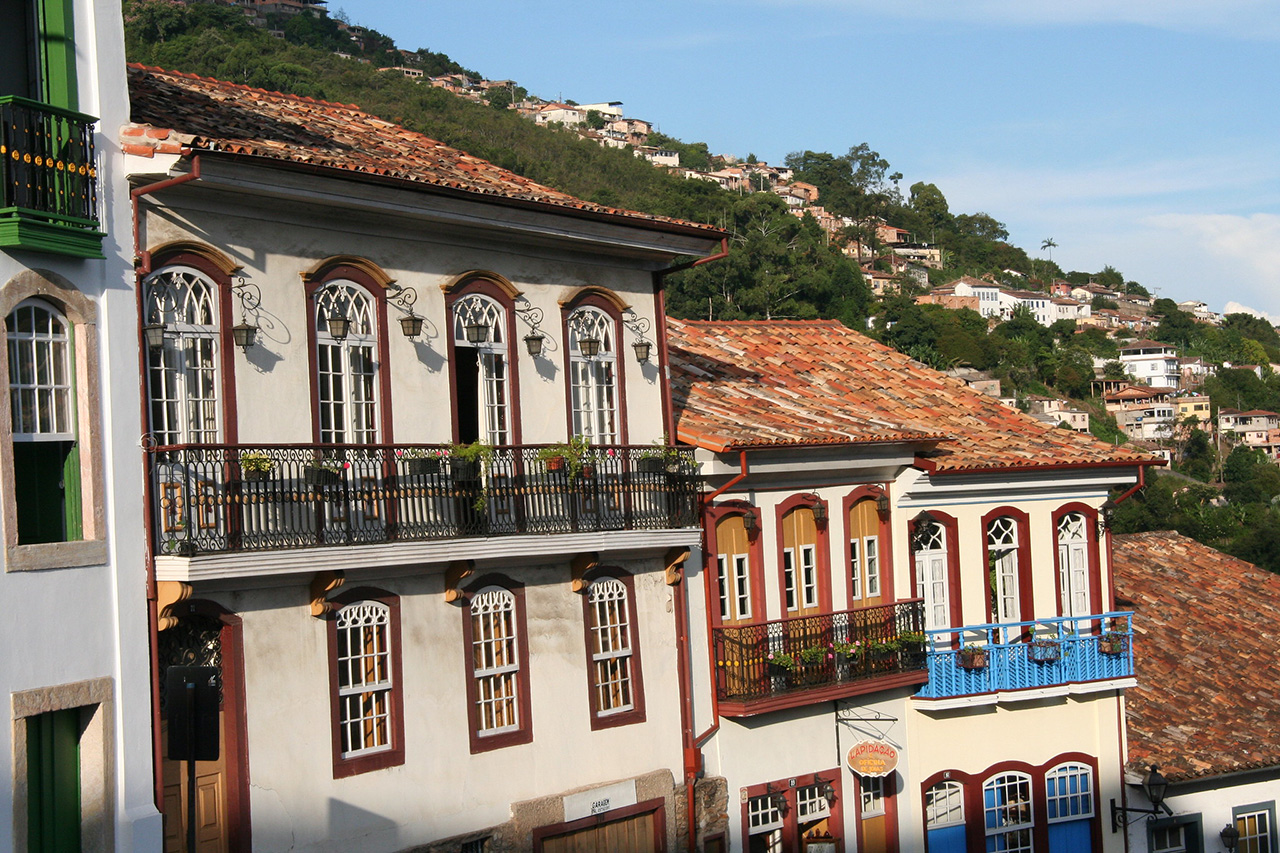
This full-day tour takes in two historic towns: Ouro Preto and Mariana. Ouro Preto was previously known as Vila Rica and was formerly the state capital of Minas Gerais. The first Brazilian city to be declared a World Heritage Site by UNESCO in 1980, Ouro Preto is located high in the remote Serra do Espinhaço mountain range. The name originates from the strange black metal found in 1693 by the Bandeirantes (explorers from São Paulo who were looking for indians to capture), which later turned out to be gold (alluvial gold mixed with iron ore).
The resulting wealth and prosperity brought a flowering of the arts and the advent of the great painter Manuel da Costa Athaíde and the sculptor Antônio Francisco Lisboa, known as Aleijadinho. Ouro Preto now has the world’s largest homogeneous collection of Baroque art – its masterpieces include the churches of São Francisco de Assis (1771) and Nossa Senhora do Pilar (1730), one of the most exuberant temples in Minas Gerais. Ouro Preto was also the site of a violent revolt (the 1789 Inconfidência Mineira) against the Portuguese, caused by unpopular taxes on gold.
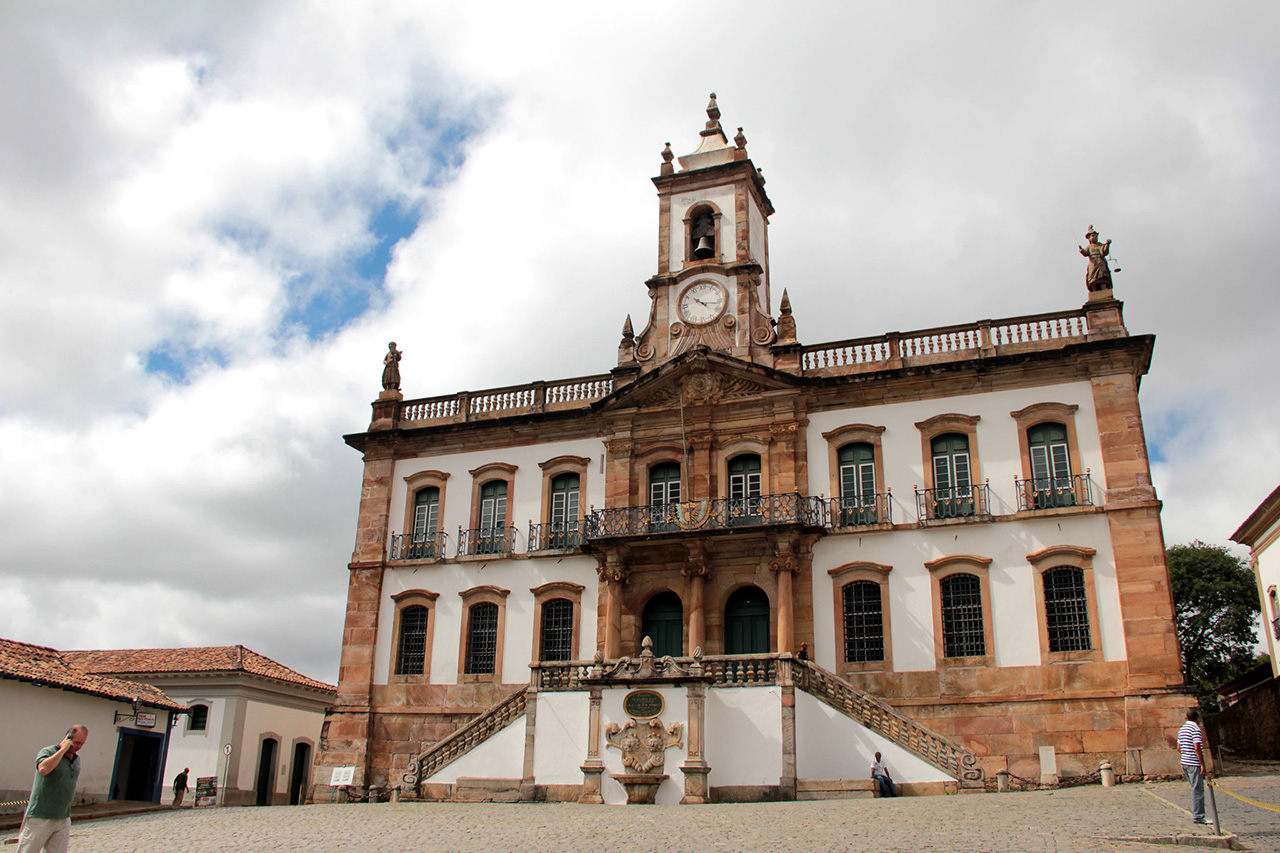
The tour includes visits to the Museu da Inconfidência (one of Brazil’s most important museums) and the church of Nossa Senhora do Rosário (1785), an excellent example of the colonial Baroque period in Minas Gerais. The next stop is Congonhas, a town adorned by Antônio Franciso Lisboa’s two greatest masterpieces: The Twelve Prophets, in the Basílica do Bom Jesus de Matosinhos, carved in soapstone, and 66 painted wooden statues, located in six chapels along the route to the main church, depicting Christ’s Passion. Brazil’s most famous Baroque artist, Antônio Franciso Lisboa (1730-1814) was called Aleijadinho (the little cripple) because he lost the use of his hands and legs at the age of 30. However, with a hammer and chisel strapped to his arms, he managed to produce the most beautiful sculptures.
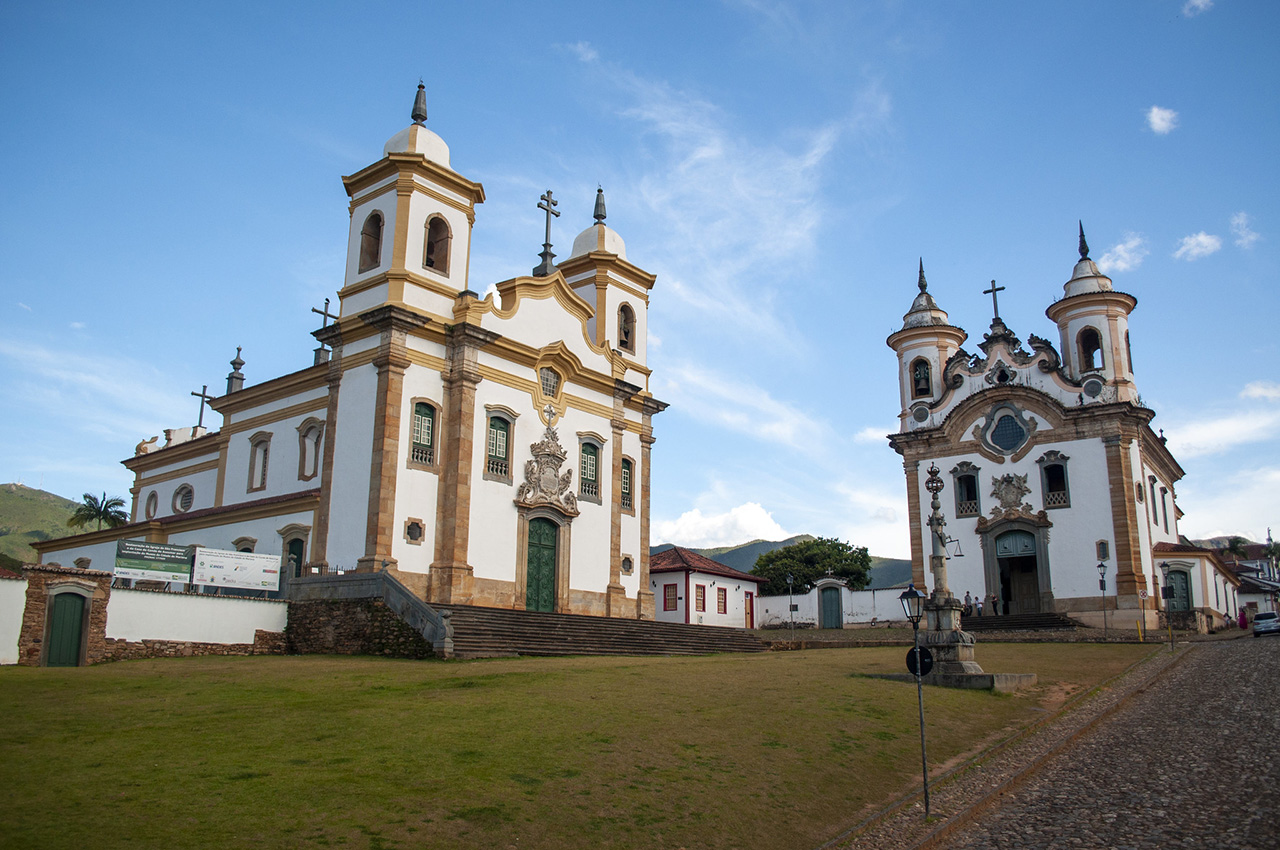
From Ouro Preto, the tour continues to Mariana, a pleasant little mining town only 12 kilometres away, once the administrative centre of the gold mines of central Minas Gerais. As in Ouro Preto, there are numerous historical monuments and churches, and weekly organ concerts of Baroque music are given on the German organ dating from 1701 at the Cathedral Basílica da Sé.