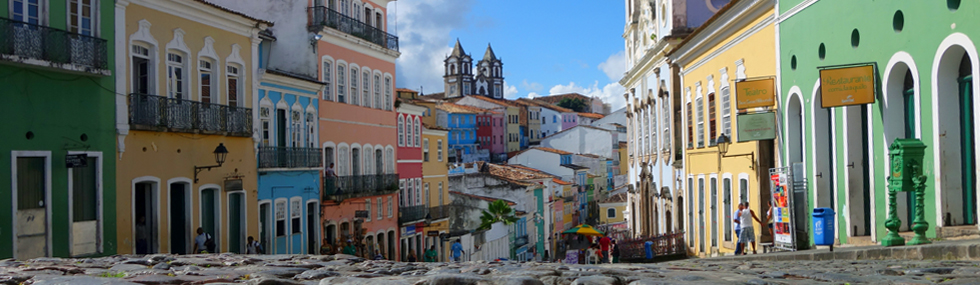
Brazil’s first capital (from 1549 to 1763) sits on a peninsula overlooking the bay that gave the state its name: Bahia. For Brazilians, Bahia is synonymous both with a more relaxed pace of life and a special intensity in all that Brazil represents: colour, music and religiousness. This is undoubtedly a consequence of Salvador being Brazil’s strongest link with Africa, having been the principal port of entry for slaves. Eighty percent of the inhabitants are of Afro-Brazilian origin and are very proud of their roots. The best capoeira (a terpsichorean martial art) of Brazil is found in Salvador, whilst Candomblé, the Afro-Brazilian religious cult, permeates the city. The Pelourinho (whipping post), as the old town centre of Salvador is called, hosts a wealth of Baroque churches and colonial-style architecture. It is also the focus of Salvador’s famous and exuberant nightlife with countless restaurants, bars and nightclubs; and forms the splendid Elevador Lacerda backdrop to carnival celebrations that are livelier and last longer than anywhere else in Brazil.